

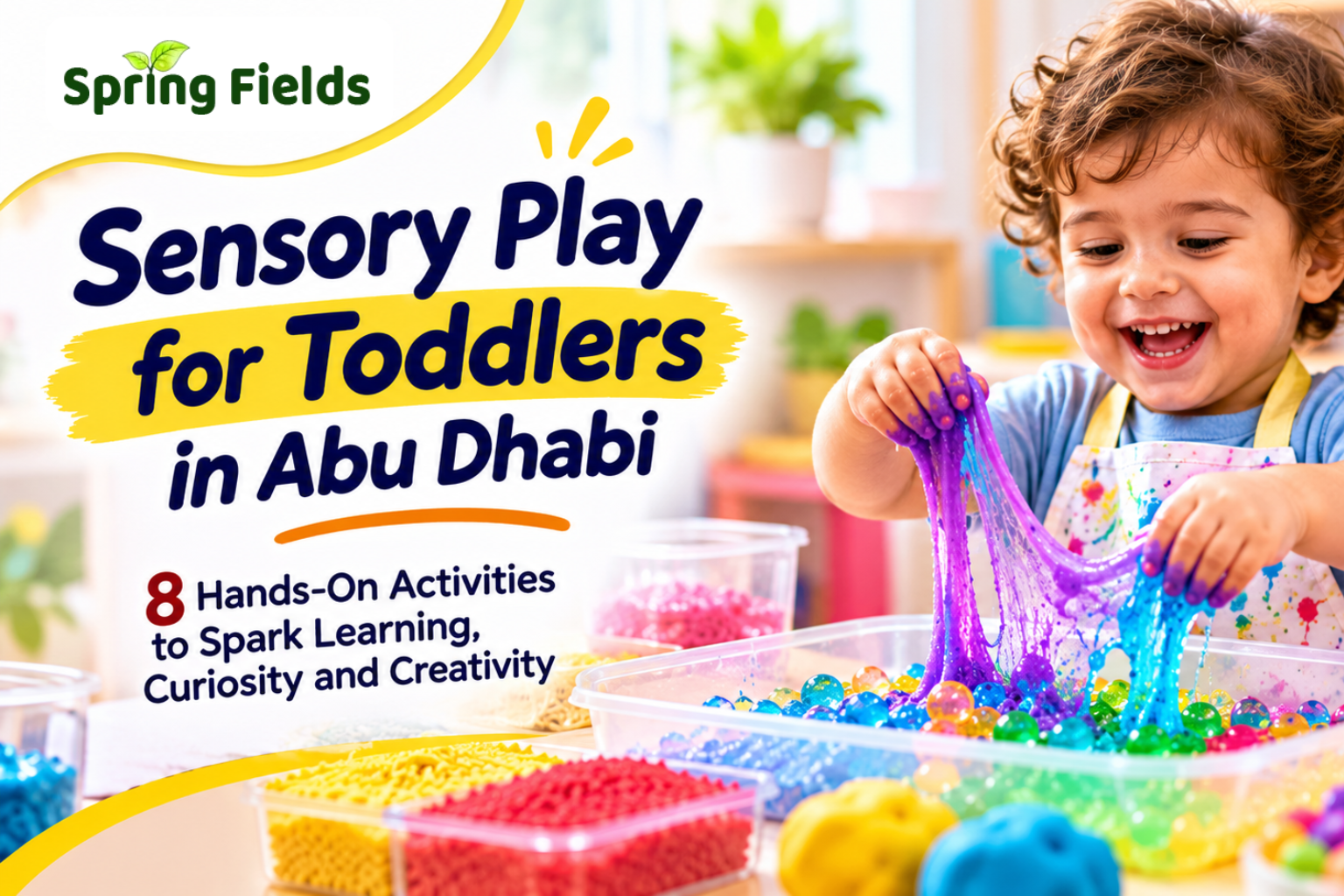
Sensory Play for Toddlers in Abu Dhabi: 8 Activities That Make Learning Hands-On
What happens when a toddler pours water from one cup into another, squishes soft playdough between their fingers or discovers the different textures of sand and leaves?
It may look like simple play, but these little experiences introduce children to a world of discovery.
Young children understand their surroundings through their senses. They touch, see, hear, smell and move as they explore new objects, materials and environments. This is why sensory play for toddlers in Abu Dhabi can be such a valuable part of early childhood learning.
Sensory activities give children opportunities to experiment, make observations, solve simple problems and express their curiosity without needing complicated toys or structured lessons.
Whether at home or in an early learning environment, simple hands-on experiences can make everyday moments more meaningful.
What Is Sensory Play?
Sensory play refers to activities that encourage children to explore the world through their senses.
These experiences may involve:
- Touching different textures.
- Exploring colours, shapes and patterns.
- Listening to different sounds.
- Observing how materials move and change.
- Exploring safe smells and familiar objects.
- Using body movement and balance.
For example, when a child plays with water, they may notice that an empty cup feels lighter than a full one. When they squeeze playdough, they discover how pressure changes its shape.
These small discoveries encourage children to observe, experiment and learn through experience.
Why Is Sensory Play Important in Early Childhood?
Sensory play is more than an entertaining activity. It provides opportunities to develop several important early learning skills.
1. Encourages Curiosity and Exploration
Young children naturally want to investigate unfamiliar objects.
Sensory activities allow them to explore at their own pace. They can touch, compare, move and experiment with different materials.
This encourages curiosity and helps children become more confident in exploring their surroundings.
2. Introduces Early Problem-Solving
Consider a simple activity involving pouring water between containers.
A child may discover that a wide container fills differently from a narrow one. They may experiment with different ways of transferring water or notice when a container becomes full.
These experiences introduce early problem-solving and simple cause-and-effect relationships.
3. Supports Language Development
Sensory experiences give children something meaningful to talk about.
Words such as rough, smooth, soft, hard, wet, dry, warm, cold, heavy and light become easier to understand when children can experience them directly.
Parents and educators can introduce new vocabulary naturally while children play.
4. Develops Coordination and Control
Picking up objects, squeezing materials, scooping sand and transferring water require children to coordinate their hands and movements.
These experiences provide opportunities to practise hand control and coordination.
5. Encourages Creativity
There is no single correct outcome in sensory play.
A child can turn playdough into different shapes, create patterns in sand or experiment with colours.
Open-ended activities allow children to use their imagination and develop their own ideas.
6. Creates Opportunities for Social Interaction
When children explore materials together, they have opportunities to share, take turns, observe one another and communicate.
These everyday interactions can support early social learning.
8 Simple Sensory Play Activities for Toddlers
Parents do not need expensive equipment to introduce sensory play at home. Many activities can be created using simple household materials.
Here are eight ideas suitable for supervised, age-appropriate play.
1. Water Pouring and Splashing
Water play is a simple way to introduce children to different textures, movement and cause-and-effect experiences.
What you need:
- A shallow water tray.
- Large plastic cups.
- Small jugs.
- Floating bath toys.
How to play:
Allow your child to scoop and pour water between containers. Encourage them to notice how water moves and how different containers hold different amounts.
What children explore: Pouring, coordination, observation and simple comparisons.
Always supervise children closely around water. Even shallow water can present a drowning risk.
2. Homemade Playdough Exploration
Playdough gives children opportunities to squeeze, flatten, roll and shape materials.
What you need:
- Age-appropriate, non-toxic playdough.
- A clean play surface.
- Large, child-safe moulds.
How to play:
Let children explore the material freely. They can flatten it with their hands, make simple shapes or use large moulds to create patterns.
What children explore: Texture, hand movements, creativity and shape recognition.
Use only age-appropriate, non-toxic materials. Homemade playdough is not automatically safe to eat, and children who may put materials in their mouths need particularly close supervision.
3. Texture Discovery Basket
A texture basket introduces children to different surfaces and materials.
What you need:
- A soft fabric cloth.
- A large silicone object.
- A smooth wooden block.
- A large textured ball.
- A soft sponge.
How to play:
Place a few safe objects in a basket and let your child explore them. Introduce descriptive words such as soft, smooth, bumpy and rough.
What children explore: Touch, vocabulary, comparison and curiosity.
Choose objects that are too large to swallow and do not have sharp edges, detachable parts or choking hazards.
4. Colour Mixing with Water
Children often enjoy discovering what happens when colours combine.
What you need:
- A few transparent containers.
- Water.
- Child-safe, washable liquid colours.
How to play:
Prepare small amounts of coloured water in separate containers. With adult assistance, allow children to combine two colours and observe the result.
What children explore: Colours, observation, prediction and experimentation.
Use non-toxic products specifically suitable for children’s activities. Prevent children from drinking the coloured water.
5. Sand Exploration
Sand offers an interesting tactile experience.
What you need:
- Clean, age-appropriate play sand.
- A shallow tray.
- Large scoops and containers.
How to play:
Allow children to scoop, pour and move the sand between containers. They can explore how it feels when dry and how its texture changes when slightly damp.
What children explore: Texture, movement, comparison and hand control.
Use clean play sand and supervise closely to prevent children from putting sand in their mouths or throwing it.
6. Sound Discovery
Sensory play also includes listening.
What you need:
- A small selection of safe musical instruments.
- A child-friendly shaker.
- A soft drum.
How to play:
Create different sounds using the instruments. Encourage children to listen, repeat rhythms and notice differences between loud and quiet sounds.
What children explore: Listening, rhythm, attention and sound recognition.
Avoid excessively loud sounds and use age-appropriate instruments.
7. Nature Discovery Tray
Nature provides a variety of interesting materials for exploration.
What you need:
- Large, safe leaves.
- Smooth, large stones.
- Large pieces of bark.
- Other clean natural materials.
How to play:
Let children observe and compare the materials. Talk about their shapes, colours and textures.
What children explore: Observation, vocabulary, natural surroundings and comparison.
Check all materials carefully. Avoid poisonous plants, sharp objects, small items, insects and anything that may cause an allergic reaction. Keep natural materials away from children’s mouths.
8. Sponge Squeeze Activity
This simple activity combines water exploration with hand movements.
What you need:
- A clean, large sponge.
- A shallow water container.
- A second empty container.
How to play:
Show children how to dip the sponge into water, lift it and squeeze it into another container.
Let them repeat the process at their own pace.
What children explore: Hand control, coordination, cause and effect, and water movement.
Supervise the activity throughout and ensure children do not bite or swallow pieces of the sponge.
How to Make Sensory Play Meaningful
The value of sensory play does not come from how many activities a child completes. It comes from the opportunity to explore and discover.
Parents and educators can make these experiences more meaningful with a few simple practices.
Allow children to lead: Give them time to investigate materials in their own way instead of demonstrating every step.
Introduce descriptive language: Use simple words to explain what children are experiencing. For example, say, “The sponge feels soft” or “The water is moving.”
Keep activities manageable: Introduce a small number of materials at a time. Too many objects can make an activity overwhelming.
Respect individual preferences: Some children enjoy messy activities, while others prefer observing before participating. Never force a child to touch a material they dislike.
Prioritise safety: Check materials, supervise activities and consider age, allergies and choking risks before introducing anything new.
Allow repetition: Children often repeat the same activity because they are exploring what happens when they try something differently.
Sensory Play and the EYFS Framework
The British Early Years Foundation Stage (EYFS) framework recognises the importance of learning through play and meaningful experiences.
Sensory activities can connect with several areas of early learning, including:
- Communication and Language: Describing experiences and learning new vocabulary.
- Physical Development: Exploring movement, coordination and control.
- Personal, Social and Emotional Development: Participating with others and expressing preferences.
- Mathematics: Exploring patterns, quantities, shapes and comparisons.
- Understanding the World: Investigating materials, objects and the environment.
- Expressive Arts and Design: Creating, experimenting and exploring different materials.
These areas do not need to be taught separately during every activity. A single play experience can provide opportunities to explore several skills at once.
At Spring Fields Preschools Abu Dhabi, children from two months to four years are welcomed into an early learning environment guided by the British EYFS framework.
Parents can learn more about the nursery’s classes and age groups.
Frequently Asked Questions About Sensory Play
At what age can children start sensory play?
Babies can experience simple sensory activities from infancy, provided they are suitable for their developmental stage and closely supervised. Activities should become more varied as children grow and develop new abilities.
Is sensory play suitable for two-year-olds?
Yes. Two-year-olds can enjoy age-appropriate activities involving water, playdough, textures, sounds and simple exploration. Materials must be selected carefully to avoid choking and other safety risks.
Does sensory play help with language development?
Sensory activities can create opportunities for language development by giving children real experiences to describe. Adults can introduce vocabulary naturally while children explore.
How often should toddlers participate in sensory play?
There is no fixed daily requirement. Short, enjoyable opportunities can be included regularly as part of a child’s play routine. Follow the child’s interest and avoid making activities feel like compulsory lessons.
What are the easiest sensory play activities to try at home?
Water pouring, playdough exploration, texture baskets, sound discovery and supervised nature exploration are simple starting points.
Is messy play the same as sensory play?
Messy play is one type of sensory play. It usually involves materials that children can touch, mix, shape or manipulate. Sensory play also includes experiences involving sound, movement, sight and other senses.
Let Little Hands Discover a Big World
Everyday experiences can become opportunities for learning when children are given the freedom to explore.
A little water, a handful of playdough, a collection of textures or a simple sound-making activity can encourage curiosity and create meaningful moments of discovery.
At Spring Fields Preschools, we believe that the early years should give children opportunities to explore, experiment, communicate and grow through age-appropriate experiences.
Looking for an early learning environment that encourages curiosity and discovery?
Explore Spring Fields Preschools Abu Dhabi or contact our team to learn more.
Spring Fields Preschools – Giving Every Little Explorer Room to Grow.