
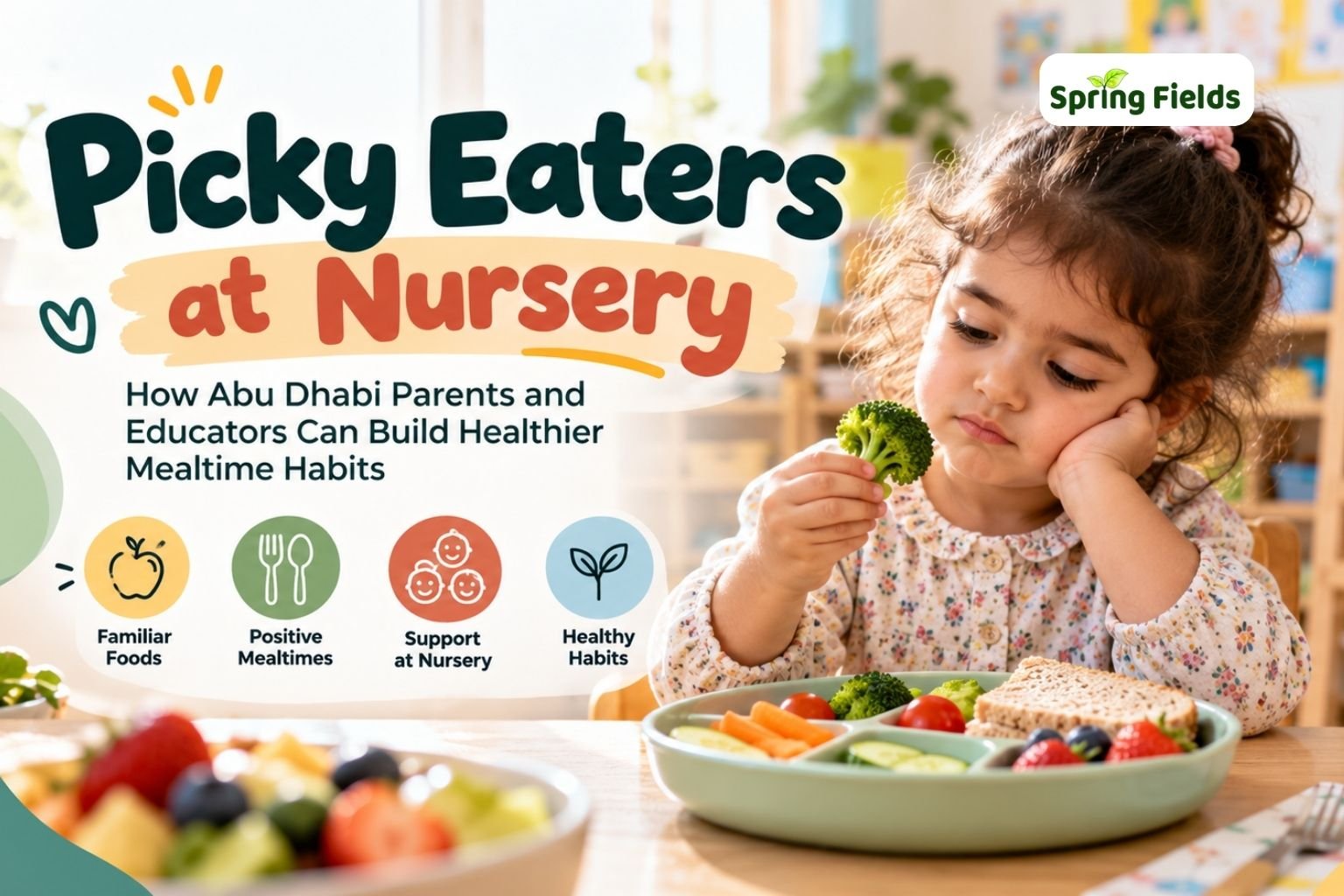
Picky Eaters at Nursery: How Abu Dhabi Parents and Educators Can Build Healthier Mealtime Habits
Does your toddler refuse vegetables, reject unfamiliar foods or insist on eating the same meal every day? If so, you are not alone. Picky eating in toddlers is a common concern for parents, particularly during the early years when children begin developing their own preferences, routines and sense of independence.
For families in Abu Dhabi, helping children build healthier eating habits is a shared responsibility between home and nursery. Familiar routines, positive mealtime experiences and repeated opportunities to explore different foods can help children become more comfortable with a wider variety of meals over time.
At Spring Fields Preschools, we believe early childhood is an important time to develop everyday habits that support children’s wellbeing, independence and learning.
Why Do Toddlers Become Picky Eaters?
Young children are still discovering the world around them, and food is no exception. A meal that looks appealing to an adult may seem unfamiliar or unpleasant to a toddler.
Several factors can influence a child’s eating habits:
- Familiarity: Children may prefer foods they already know and feel comfortable eating.
- Texture and appearance: Some children are sensitive to the smell, colour, temperature or texture of particular foods.
- Growing independence: Toddlers increasingly want to make their own choices. Refusing a meal can sometimes be one way of expressing that independence.
- Changing appetite: A child’s appetite can vary from one meal to another as growth and activity levels change.
- Mealtime experiences: Pressure, arguments or repeated negotiations around food may make meals feel stressful.
Picky eating does not automatically mean a child has a nutritional problem. However, consistently eating very few foods, struggling with certain textures or showing signs of poor growth may require professional advice.
Understanding the reason behind a child’s preferences is a more useful starting point than labelling them a difficult eater.
How Nursery Experiences Can Shape Children’s Eating Habits
A nursery is more than a place where children learn through play. It is also an environment where they develop social routines, independence and everyday habits.
A 2026 study published in Frontiers in Public Health, examining food preferences among 64 children aged four to eight in Abu Dhabi, found that teachers, peers, school food practices and family routines all influenced children’s understanding of and choices around food.
Although the study included children beyond toddler age, it highlights an important point: children’s food habits are shaped by the environments and people around them.
A supportive nursery environment can help children:
- Become familiar with different foods without feeling pressured to eat them.
- Observe adults demonstrating positive eating habits.
- Talk about the colours, shapes, smells and textures of food.
- Develop independence during age-appropriate mealtime routines.
- Experience meals as a calm and social part of the day.
These experiences can complement the habits children develop at home.
6 Practical Ways to Help Picky Eaters Develop Healthier Habits
1. Introduce New Foods Alongside Familiar Favourites
A completely unfamiliar meal can feel overwhelming to a young child. Instead of replacing everything they enjoy, introduce one new food alongside something they already accept.
For example, if your child enjoys rice, you could serve it with a small portion of a familiar vegetable or a new food prepared in a recognisable way.
The aim is to make exploration feel manageable. A child does not have to finish a new food for the experience to be worthwhile.
2. Offer Repeated, Pressure-Free Exposure
Children may need to encounter a food several times before they feel comfortable trying it. Seeing, touching, smelling or tasting a food can all be part of the learning process.
Try offering a small portion of a new food on different occasions. Avoid forcing your child to take a bite or finish everything on the plate.
Abu Dhabi’s local guidance on picky eating recommends repeated exposure, familiar foods alongside unfamiliar ones and avoiding pressure to finish meals.
Patience matters. Progress may be gradual, and a child’s response can vary from one day to the next.
3. Make Mealtimes Calm and Predictable
Children benefit from routines they can understand. Regular meal and snack times can help establish a predictable rhythm throughout the day.
Where possible:
- Offer meals in a calm, comfortable setting.
- Allow enough time for children to eat without rushing them.
- Reduce distractions during meals.
- Avoid turning every meal into a negotiation.
- Respect a child’s signs of hunger and fullness.
A predictable routine can make mealtimes feel more comfortable without requiring every meal to be perfect.
4. Let Children Explore Food Through Play
Food does not always need to be introduced through a formal meal. Age-appropriate activities can help children become curious about what they eat.
Depending on the child’s age and safety needs, parents and educators could:
- Sort pictures of fruits and vegetables by colour.
- Name different foods while reading a picture book.
- Let children wash suitable fruits with adult supervision.
- Explore the shapes and textures of safe, age-appropriate ingredients.
- Help prepare a simple snack with adult support.
These activities encourage curiosity and familiarity. They should not be used to pressure children into eating a particular food.
Always supervise food-related activities and follow appropriate food hygiene and choking-prevention practices.
5. Model Positive Eating Habits
Children learn by watching adults. When parents and educators eat a varied range of foods and speak positively about meals, they give children opportunities to observe healthy habits.
Instead of saying, “You must eat your vegetables because they are good for you,” try describing the food in a neutral, inviting way.
For example:
- “This carrot is crunchy.”
- “The mango is soft and sweet.”
- “Would you like to look at the peas or the carrots first?”
The goal is to make food familiar and interesting, not to persuade a child through repeated instructions.
6. Keep Home and Nursery Communication Open
Consistency between home and nursery can help adults understand a child’s eating patterns.
Parents can share useful information with educators, including:
- Foods their child usually accepts.
- Foods or textures they tend to avoid.
- Any known allergies or dietary restrictions.
- Cultural or family food preferences.
- Relevant feeding concerns or professional advice.
Educators can share observations about what the child eats, which foods they explore and whether particular situations affect their mealtime experience.
This two-way communication helps adults support the child without creating conflicting expectations.
Healthy Lunchbox Habits for Nursery Children in Abu Dhabi
For children who bring food from home, a lunchbox can offer familiar options while gradually introducing variety.
Consider these practical principles:
Include familiar foods. A child may feel more comfortable when at least one accepted food is available.
Offer age-appropriate variety. Where suitable, include a selection of foods from different food groups, considering the child’s age, dietary needs and appetite.
Make food manageable to eat. Use suitable portions and textures, and prepare foods in ways that match the child’s chewing and developmental abilities.
Keep preparation practical. Choose foods that can be packed and stored safely according to nursery requirements.
Follow the nursery’s food policy. Check guidance on allergens, permitted foods, storage and any restrictions before preparing your child’s lunchbox.
A 2026 study of children’s food habits in Abu Dhabi also highlighted the influence of lunchbox practices, preparation time and the appearance of food. Simple, colourful presentation may encourage curiosity, but there is no need to create elaborate meals every day.
The focus should remain on safe, balanced and practical food choices rather than making every lunchbox look perfect.
What Does ADEK’s Food and Nutrition Policy Mean for Parents?
Abu Dhabi’s Department of Education and Knowledge (ADEK) has a Food and Nutrition Policy for early education institutions. The policy establishes a framework for food and nutrition in these settings, including consideration of children’s individual needs and parent engagement in nutrition-related decisions.
For parents, this reinforces the importance of communicating with their child’s nursery about dietary requirements, allergies and relevant feeding concerns.
You can read the official policy on the ADEK website.
Parents should also check their individual nursery’s procedures, since practical arrangements for meals and lunchboxes may vary.
When Should Parents Seek Professional Advice?
Picky eating can be part of a child’s development, but some concerns deserve closer attention.
Speak with your child’s paediatrician if your child:
- Eats an extremely limited range of foods or progressively excludes more foods.
- Has difficulty chewing or swallowing.
- Frequently coughs, chokes or gags during meals.
- Shows signs of dehydration, low energy or poor growth.
- Appears distressed by most eating situations.
- Has persistent feeding difficulties that affect daily life.
A healthcare professional can assess whether the child needs further evaluation or support from a qualified feeding or nutrition specialist.
Avoid forcing food, using punishment or withholding all familiar foods to make a child eat something new. These approaches can increase distress and make mealtimes more difficult.
Building Healthy Eating Habits Starts With Small Steps
Helping picky eaters develop healthier habits takes time, patience and cooperation. Children do not need to accept every food immediately, and one difficult meal does not define their long-term eating habits.
When parents and nursery educators provide familiar options, encourage gentle exploration and maintain calm routines, children can gradually develop a more positive relationship with food.
At Spring Fields Preschools in Abu Dhabi, early learning includes everyday experiences that help children build confidence, independence and positive routines. Families can explore our classes and early learning approach to learn more about the experiences available to young children.
Looking for a nursery that values your child’s individual needs? Contact Spring Fields Preschools to learn more about our early learning environment and discuss your child’s needs with our team.
Frequently Asked Questions
1. Is picky eating normal in toddlers?
Picky eating is common during early childhood as children develop food preferences and independence. However, severe or persistent food restriction, feeding difficulties or concerns about growth should be discussed with a healthcare professional.
2. How can I encourage my toddler to try new foods?
Offer small portions of unfamiliar foods alongside familiar favourites. Let your child explore the food without pressure, and offer it again on other occasions. Touching, smelling or looking at food can be part of the process.
3. Should I force my child to finish their nursery lunchbox?
No. Forcing children to finish their meals can make mealtimes stressful. Offer appropriate portions, encourage a calm routine and pay attention to your child’s hunger and fullness cues. Discuss ongoing concerns with your child’s healthcare professional.
4. What should I pack for a picky eater at nursery?
Start with foods your child usually accepts, then introduce suitable variety gradually. Follow the nursery’s rules for allergens, food storage and permitted foods. Prepare food in age-appropriate shapes and textures to reduce choking risks.
5. Can nursery educators help with picky eating?
Nursery educators can support positive routines, model healthy eating behaviours and communicate observations to parents. They can complement the family’s approach, but persistent feeding or nutritional concerns may require professional assessment.
6. When should I worry about my toddler’s eating habits?
Seek professional advice if your child has an extremely restricted diet, difficulty chewing or swallowing, frequent choking, signs of dehydration, poor growth or significant distress around eating. Early assessment can help identify appropriate support.