

Early Childhood Week UAE 2026: Simple Ways Parents Can Support Their Child’s Development
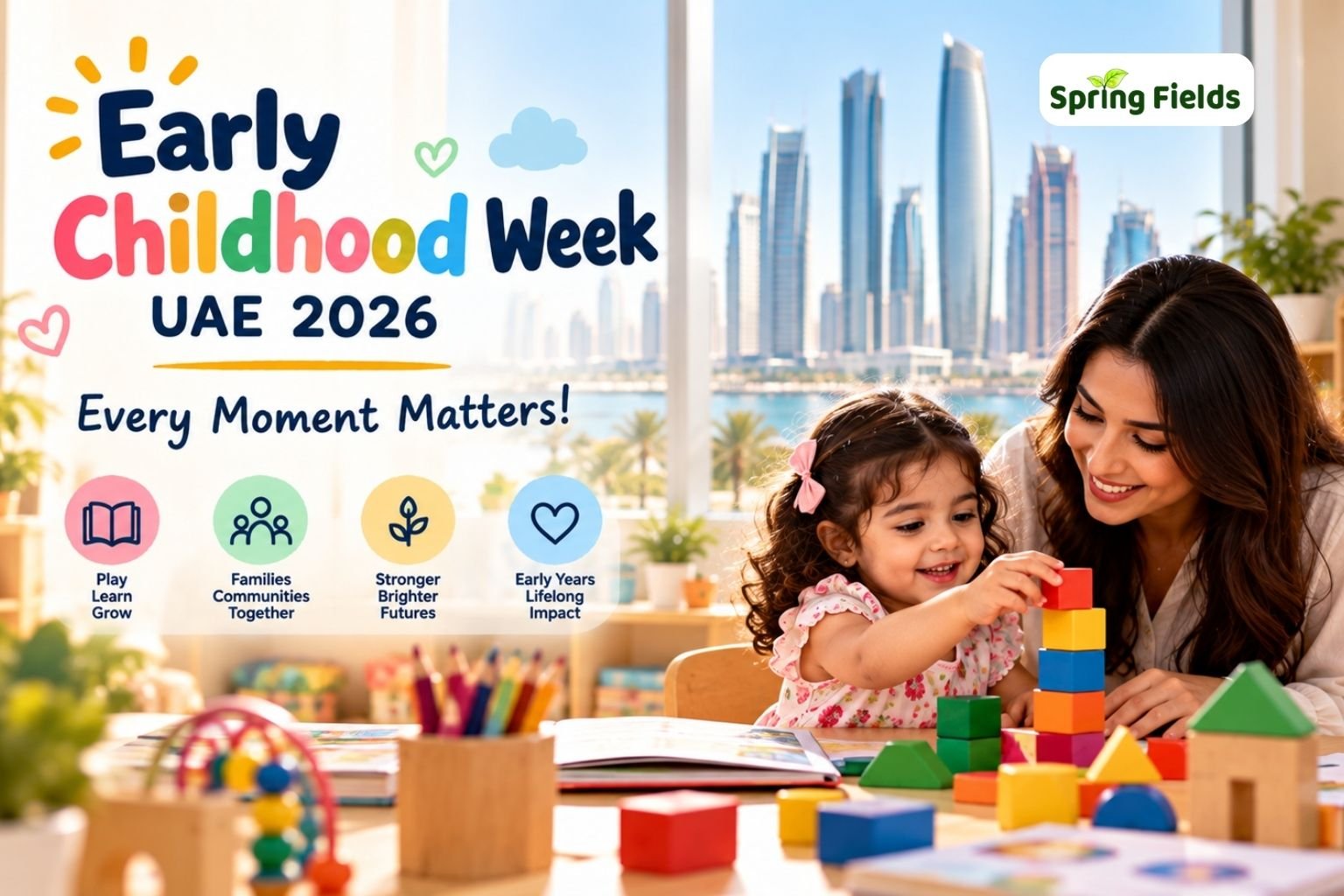
The first national edition of Early Childhood Week will take place across the UAE from 16 to 22 November 2026, led by the Ministry of Family in collaboration with the Abu Dhabi Early Childhood Authority (ECA). The theme is “Every Moment Matters!”, highlighting the role of families, caregivers and communities in supporting children’s early development.
For parents, the message is practical: supporting a young child’s development does not always require expensive toys, elaborate activities or a tightly packed schedule. Everyday moments—talking together, reading a story, playing outdoors, sharing meals and responding to a child’s questions—can create meaningful opportunities for learning.
For families in Abu Dhabi, Early Childhood Week is an opportunity to reflect on how home and nursery experiences work together to support children’s communication, confidence, curiosity and wellbeing.
This guide explores simple ways parents can take part and make everyday interactions more meaningful.
1. What Is Early Childhood Week UAE 2026?
Early Childhood Week is a national initiative that celebrates the importance of the early years and encourages families, caregivers, communities and organisations to contribute to children’s development.
The 2026 edition will run across the UAE from 16–22 November as part of the country’s Year of Family programmes. It aims to raise awareness of early childhood, strengthen family involvement and encourage environments that help children grow and thrive.
The week is relevant to parents of babies, toddlers and preschoolers because early childhood involves more than preparing children for school. It also includes developing relationships, communicating needs, exploring the world, building independence and learning to manage emotions.
Families can follow announcements from the Abu Dhabi Early Childhood Authority for updates on activities and initiatives.
2. Why Do Everyday Moments Matter in Early Childhood?
Young children learn through their interactions with people and their surroundings. Ordinary routines can become opportunities to develop language, social skills, movement and problem-solving.
For example:
- Talking about the food on the table introduces new words.
- Sorting toys by colour encourages observation and classification.
- Sharing a picture book builds listening and communication skills.
- Helping put away toys supports independence.
- Playing with another child creates opportunities to practise sharing and cooperation.
Parents do not need to turn every activity into a formal lesson. Following a child’s interests, responding to their attempts to communicate and allowing time for exploration can make everyday experiences more meaningful.
The theme “Every Moment Matters!” is a useful reminder that a child’s development is supported by the quality of everyday interactions, not simply by the number of activities completed.
3. Five Simple Ways to Participate in Early Childhood Week
Parents do not need to wait for a large event to participate. These simple activities can be incorporated into family life during the week and continued throughout the year.
Read a story together
Choose a picture book and allow your child to explore the illustrations. Ask simple questions such as “What do you see?” or “What do you think happens next?”
For younger children, pointing, naming objects and repeating familiar words are valuable ways to participate.
Keep reading relaxed. The objective is to enjoy the story together rather than test your child’s memory.
Make time for child-led play
Give your child a few safe, age-appropriate toys and let them decide how to use them. Blocks, stacking cups, pretend food, puzzles and drawing materials can encourage exploration.
Follow your child’s ideas instead of directing every step. If your child builds a tower, for example, you can describe what is happening or wonder aloud how to make it taller.
Child-led play gives children opportunities to practise decision-making, creativity and persistence.
Explore the outdoors
A walk around the neighbourhood, a visit to a suitable park or time spent observing plants and birds can encourage curiosity and movement.
Talk about what your child notices. You might compare leaves, count steps or listen for different sounds.
Choose activities appropriate to your child’s age, weather conditions and safety needs.
Encourage independence through daily routines
Young children can participate in simple tasks with appropriate supervision. Depending on their developmental stage, they may help put toys away, choose between two outfits or carry an unbreakable cup to the table.
Allow extra time and expect some mess. The purpose is to let children practise rather than complete every task perfectly.
Put devices aside for shared time
Set aside a short period when adults and children can focus on one another without unnecessary phone distractions.
Talk, sing, build something together or simply play. These moments give children opportunities to communicate and help parents notice their interests, emotions and emerging skills.
4. How Parents Can Support Language and Communication
Communication develops through repeated interactions. Parents can support this process by talking with their children throughout the day, listening to their attempts to communicate and responding with interest.
Try these approaches:
- Narrate everyday routines: Describe what you are doing while getting ready, cooking or tidying up.
- Expand on your child’s words: If your child says “big car,” you might respond, “Yes, that’s a big red car.”
- Ask open-ended questions: When appropriate for your child’s age, ask what they noticed or what they would like to do next.
- Make space for responses: Give your child time to answer through words, gestures or expressions.
- Enjoy songs and rhymes: Repetition and rhythm can make language engaging.
Children develop at different rates, so avoid comparing your child’s communication with that of other children. If you have concerns about their hearing, speech or development, discuss them with an appropriate healthcare professional.
5. Why Nursery and Family Partnerships Matter
Children experience learning in different environments. A strong partnership between parents and nursery educators helps adults understand a child’s interests, routines, progress and support needs.
Parents know their child’s home routines and preferences. Educators observe how the child interacts, plays and learns in a group setting. Sharing these perspectives can help create greater consistency between home and nursery.
Parents can strengthen this partnership by:
- Sharing relevant information about routines and preferences.
- Reading nursery updates and asking questions when needed.
- Discussing changes in behaviour or circumstances.
- Asking educators about activities that can be continued at home.
- Celebrating progress in communication, independence and social interaction.
At Spring Fields Preschools, the early-years approach follows the British Early Years Foundation Stage (EYFS) framework and uses age-appropriate, play-based learning experiences.
Families can explore the Spring Fields approach and its classes and programmes to understand how early learning is organised.
6. Activities Parents Can Try at Home by Age Group
The best activity depends on a child’s age, interests and abilities. Keep materials safe and supervise children throughout.
| Age group | Simple activity | Skills it can encourage |
|---|---|---|
| Babies | Talk, sing and respond to sounds and expressions | Early communication and connection |
| Toddlers | Stack cups, sort large objects or name familiar items | Coordination, language and exploration |
| Nursery-age children | Read picture books, draw or play pretend games | Imagination, vocabulary and expression |
| Older preschoolers | Build structures, follow simple recipes or tell stories | Problem-solving, sequencing and cooperation |
These are suggestions, not developmental tests. Adapt activities to the individual child and avoid small objects that may present choking hazards for younger children.
7. Supporting Emotional Wellbeing During the Early Years
Development includes emotional and social growth as well as physical and cognitive skills.
Young children may struggle to explain frustration, cope with changes or manage disappointment. Adults can help by remaining calm, naming emotions and providing predictable routines.
For example, a parent might say, “You seem upset because playtime has ended. Let’s put the toys away together.”
This approach acknowledges the child’s feelings while maintaining appropriate boundaries.
Parents can also encourage emotional development by:
- Keeping daily routines reasonably predictable.
- Offering simple choices when possible.
- Helping children name feelings.
- Praising effort and persistence.
- Providing comfort while encouraging age-appropriate independence.
There is no need to expect a toddler to manage emotions like an older child. Learning these skills takes time, repetition and supportive relationships.
8. What Can Abu Dhabi Parents Expect During Early Childhood Week 2026?
The national edition is scheduled for 16–22 November 2026 across the UAE. Organisers have described a programme intended to bring families and communities together through activities and experiences that celebrate early childhood and support children’s development.
Parents should follow official announcements for confirmed activity details, locations, registration requirements and participation arrangements. Do not assume that every activity is free or open to walk-in attendance.
Families can prepare by:
- Following announcements from the Abu Dhabi Early Childhood Authority.
- Checking the age suitability and registration requirements of any activity.
- Choosing experiences that fit their child’s interests and routine.
- Leaving time for rest and unstructured play.
- Continuing meaningful family interactions after the week ends.
Participation does not have to involve attending every event. A simple shared activity at home can also reflect the spirit of the initiative.
9. How Spring Fields Preschools Supports Early Learning
Spring Fields Preschools provides early-years programmes in Abu Dhabi for children across different stages, including Toddler, Nursery and F-S1 classes.
Its British EYFS-based approach incorporates play and age-appropriate learning experiences designed to support children’s development.
For parents, choosing a nursery involves more than checking the timetable or curriculum. It is also important to understand how educators communicate with children, support their interests and work with families.
If you are exploring nursery options in central Abu Dhabi, you can:
- Visit the Spring Fields Preschools website.
- Explore the available classes.
- Learn about the nursery’s approach.
- Contact the team to enquire about admissions and availability.
Early Childhood Week is a timely reminder that children’s learning is supported by relationships between families, educators and the wider community. Those relationships matter beyond a single week.
10. A Simple Early Childhood Week Family Checklist
Use this checklist to turn the theme into practical actions.
- Read a book together.
- Spend time playing without unnecessary phone distractions.
- Let your child choose a safe activity.
- Go for a walk and talk about what you notice.
- Encourage your child to help with a simple daily task.
- Sing a song or share a rhyme.
- Ask your nursery educator what your child enjoys learning.
- Make time for conversation during meals or other routines.
- Follow official announcements for suitable Early Childhood Week activities.
- Continue one meaningful shared activity after the week ends.
You do not need to complete every item. Choose activities that work for your child’s age, interests and daily routine.
Frequently Asked Questions
1. When is Early Childhood Week UAE 2026?
The first national edition will take place from 16 to 22 November 2026 across the UAE. It is led by the Ministry of Family in collaboration with the Abu Dhabi Early Childhood Authority.
2. What is the theme of Early Childhood Week 2026?
The national theme is “Every Moment Matters!” It highlights the importance of families, caregivers and everyday experiences in children’s early development.
3. Who can participate in Early Childhood Week?
The initiative is designed to engage families, caregivers, communities and organisations that support young children. Check official announcements for specific activities, age requirements and registration arrangements.
4. How can parents celebrate Early Childhood Week at home?
Parents can read together, play, sing, explore outdoors, talk during daily routines and give children opportunities to practise age-appropriate independence. Simple, shared experiences can be meaningful without expensive materials.
5. Why is play important in early childhood?
Play gives children opportunities to explore, communicate, use their imagination and practise emerging skills. The type of play should be appropriate for the child’s age, interests and developmental stage.
6. How can nurseries and parents work together?
Regular communication helps parents and educators share information about a child’s interests, routines and progress. This can support greater consistency between home and nursery experiences.
7. How can I learn more about Spring Fields Preschools?
Visit Spring Fields Preschools or use its Contact page to enquire about programmes and current admissions.
Final Thoughts
Early Childhood Week UAE 2026 is a reminder that supporting children begins with the everyday experiences they share with the people around them.
A conversation, a story, a walk, a song or a few minutes of uninterrupted play can become an opportunity for connection and learning. Parents do not need to create a perfect schedule or turn every moment into a lesson. Consistent, responsive interactions are a practical place to start.
As the UAE prepares for Early Childhood Week from 16–22 November, families can use the occasion to reflect on how they support their children’s communication, curiosity, independence and wellbeing.
At Spring Fields Preschools, we believe that early learning is strengthened when families and educators work together.
Explore early learning at Spring Fields Preschools: Visit our website or contact our team to learn more about our programmes.