

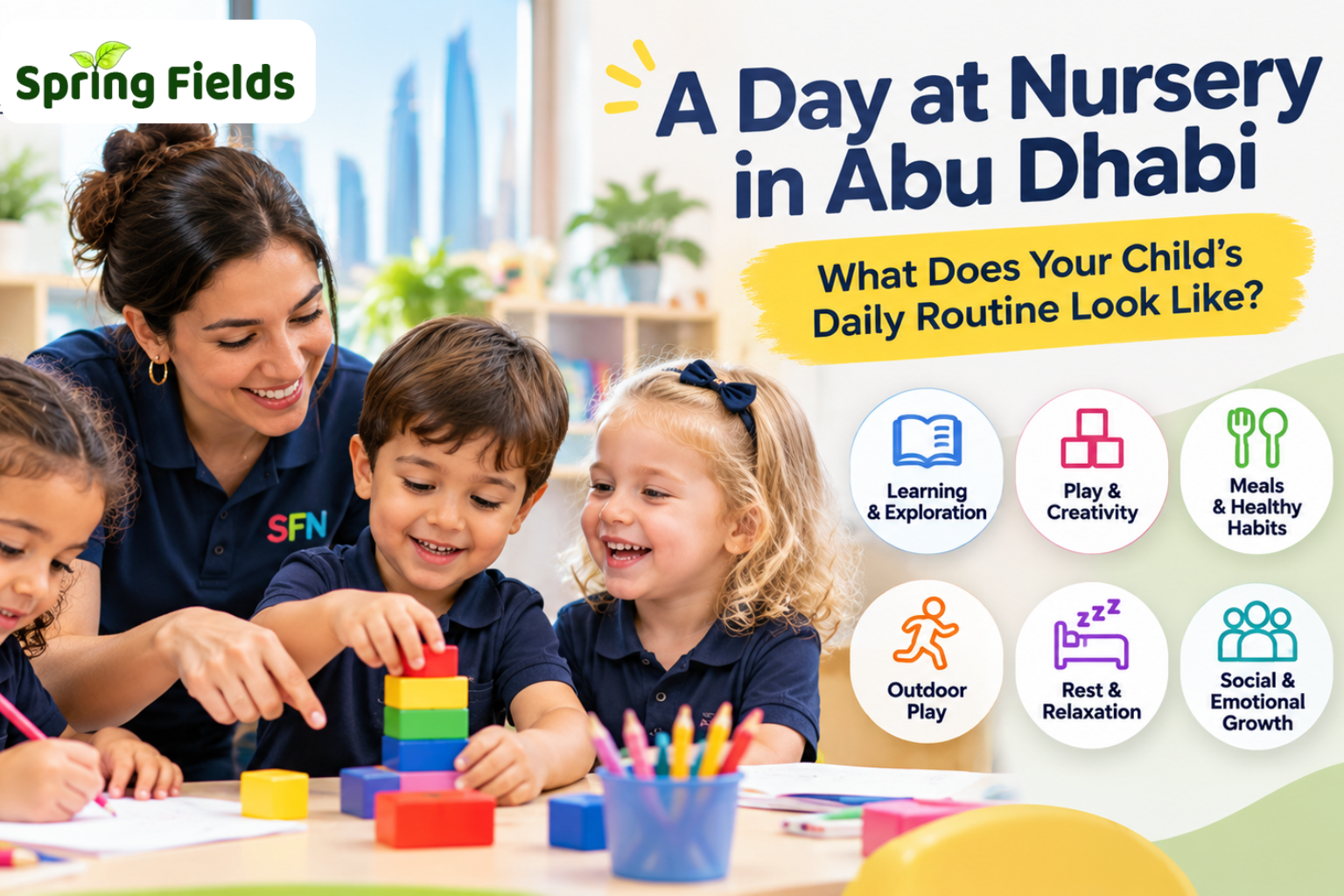
A Day at Nursery in Abu Dhabi: What Does Your Child’s Daily Routine Look Like?
Choosing a nursery in Abu Dhabi involves more than comparing fees, facilities and locations. Parents also want to understand what their child will experience throughout the day. What happens after drop-off? How much time is dedicated to play and learning? When do children eat, rest and interact with their classmates?
A well-planned nursery routine gives young children a sense of familiarity and security. It also creates opportunities to develop communication, independence, social skills and confidence.
For parents exploring daycare centres in Abu Dhabi, understanding a typical nursery day can make it easier to evaluate different childcare options and choose an environment that suits their child’s needs.
Why Is a Daily Nursery Routine Important?
Young children benefit from predictable daily experiences. Knowing what generally happens next can help them feel more comfortable in a new environment.
A balanced nursery routine can support:
- Emotional security: Familiar activities and transitions help children settle into their surroundings.
- Social development: Group activities encourage sharing, cooperation and interaction.
- Communication: Stories, songs and conversations provide opportunities to practise language.
- Physical development: Movement and play help children develop coordination and motor skills.
- Independence: Everyday activities encourage children to make choices and develop age-appropriate self-help skills.
A routine should provide structure without making every moment feel rigid. Children need time to explore, ask questions, interact and learn at their own pace.
What Does a Typical Day at Nursery Look Like?
Every nursery follows its own timetable. Activities also vary according to children’s ages, developmental stages and individual requirements.
Here is an example of how a structured nursery day may be organised.
1. Arrival and Settling In
The day usually begins with children arriving, greeting their educators and settling into the classroom.
Some children may immediately feel comfortable, while others need additional reassurance. A welcoming arrival routine helps children gradually become familiar with their surroundings.
Parents should ask how educators support children who experience separation anxiety or need extra time to settle.
2. Morning Activities and Exploration
Early learning activities may include puzzles, building blocks, books, creative materials, sensory play and practical exploration.
These experiences allow children to investigate different objects, experiment with ideas and develop curiosity.
For younger children, activities should be suitable for their developmental stage. Older children may participate in more structured group activities that encourage problem-solving and communication.
3. Learning Through Stories, Music and Play
Storytelling, songs, rhymes and imaginative play are valuable parts of early childhood education.
They introduce children to new vocabulary, sounds, ideas and social situations.
Under the British Early Years Foundation Stage (EYFS) framework, learning covers seven interconnected areas, including communication and language, physical development, personal, social and emotional development, literacy and mathematics.
Read our guide to EYFS schools in Abu Dhabi to understand how the framework supports early learning.
4. Meals and Personal Care
Mealtimes and personal care are also important parts of a nursery day.
Depending on the child’s age and the nursery’s arrangements, these routines may include meals, snacks, handwashing, nappy changes and support with toileting.
These everyday experiences can help children gradually develop independence and healthy habits.
Parents should understand the nursery’s food arrangements, hygiene practices, allergy procedures and communication process before enrolment.
5. Outdoor Play and Physical Activities
Children need opportunities to move, explore and develop physical coordination.
Age-appropriate activities may include walking, dancing, balancing, movement games and supervised outdoor play.
Physical activities can support gross motor development, spatial awareness and confidence.
Parents should ask how frequently children participate in physical activities and how the nursery adapts them to different age groups.
6. Quiet Time and Rest
Young children need sufficient rest throughout the day. Their requirements vary depending on age, development and individual routines.
A suitable nursery environment should provide opportunities for children to rest when needed.
For infants and younger toddlers, parents should discuss sleeping arrangements, individual routines and applicable safe-sleep practices with the nursery.
7. Afternoon Activities and Collection
The afternoon may include further play-based learning, creative activities, storytelling and opportunities to interact with classmates.
At collection time, parents should be able to understand how their child spent the day.
Regular communication about activities, meals, rest, behaviour and important observations helps families stay involved in their child’s development.
How Does a Nursery Routine Change With Age?
A two-month-old baby and a four-year-old child have very different needs. Their daily experiences should reflect those differences.
Here are some general considerations for different stages:
Infants and younger babies: Care should prioritise individual feeding, sleeping, hygiene, sensory experiences and responsive interaction.
Toddlers aged 1–2 years: Children benefit from sensory exploration, movement, simple language activities, music and opportunities to practise independence.
Nursery children aged 2–3 years: Activities can encourage communication, imaginative play, early problem-solving, social interaction and coordination.
FS1 children aged 3–4 years: Children can gradually participate in more structured group experiences, early literacy and numeracy activities, creative projects and school-readiness experiences.
The exact programme depends on each child’s development and the nursery’s curriculum.
What Should Parents Ask About a Nursery’s Daily Routine?
Before enrolling your child, ask the nursery how its daily programme works.
Here are eight useful questions:
- What are the usual arrival and collection times?
- How are learning activities planned for different age groups?
- How much time is dedicated to indoor and outdoor play?
- How are meals, snacks and dietary requirements managed?
- What arrangements are available for rest and sleeping?
- How do educators support children who are still settling in?
- How are parents informed about their child’s daily activities?
- How does the nursery monitor and communicate developmental progress?
You can also refer to our Abu Dhabi nursery parent checklist for more questions to consider before making your decision.
What Does a Nursery Day Look Like at Spring Fields Preschools?
Spring Fields Preschools provides early childhood care and education in Abu Dhabi for children from 2 months to 4 years.
Its learning approach follows the British EYFS framework and combines structured learning with purposeful play, exploration and age-appropriate experiences.
The nursery currently lists the following class groups:
- Toddler Class: 1–2 years.
- Nursery Class: 2–3 years.
- F-S1 Class: 3–4 years.
Spring Fields also provides age-appropriate classroom resources and learning areas that encourage children to explore and investigate independently.
The published operating hours are Monday to Friday, 7:30 AM to 6:00 PM. The website lists full-day care from 7:30 AM to 5:30 PM for children aged 12 months to 4 years. Parents should contact the nursery to confirm current session arrangements and availability.
You can explore Spring Fields Preschools’ classes and age groups to learn more about its programmes.
Choosing the Right Daycare Centre in Abu Dhabi
The right nursery should offer more than a convenient timetable. Parents should look for an environment where children receive appropriate care, meaningful learning experiences and opportunities to develop at their own pace.
Before making a decision, visit the nursery, speak with the educators and understand how its daily routine accommodates your child’s age and needs.
If you are comparing nursery fees in Abu Dhabi, remember to consider the services, attendance options and learning environment included in the overall arrangement.
A thoughtful approach can help you find a nursery that works for your family and supports your child’s early development.
Give Your Child a Positive Start at Spring Fields Preschools
Looking for a nursery or daycare centre in Abu Dhabi?
Spring Fields Preschools welcomes parents interested in its early childhood programmes. Visit the nursery, meet the educators and discuss the available classes and admission arrangements.
Location: No. 48, Al Falah Sector, East 18/3, Najda Street, Behind Burjeel Hospital, Al Danah, Abu Dhabi.
Phone: 02 622 0130 | 056 853 1555
Email: administration@springfieldspreschools.com
Website: https://springfieldspreschools.com/
Contact Spring Fields Preschools to enquire about available programmes and admissions.
Frequently Asked Questions
1. What is a typical daily routine at a nursery?
A typical nursery day may include arrival, free play, structured learning activities, meals, physical activities, rest and afternoon play. Exact schedules vary between nurseries.
2. How many hours do children spend at nursery in Abu Dhabi?
Attendance hours depend on the nursery’s operating schedule and the selected programme. Parents should confirm available sessions directly with the institution.
3. What activities do children do at nursery?
Activities may include storytelling, music, sensory play, drawing, puzzles, movement games, imaginative play and age-appropriate learning experiences.
4. Do nurseries in Abu Dhabi provide meals?
Meal arrangements vary between nurseries. Parents should ask whether meals and snacks are provided, whether food can be brought from home and how allergies are managed.
5. How do nurseries help children settle into a new environment?
Educators may use gradual settling-in arrangements, familiar routines, reassurance, play and positive interactions to help children become comfortable.
6. What age groups does Spring Fields Preschools accept?
Spring Fields Preschools states that it accepts children from 2 months to 4 years. Its published class groups include Toddler (1–2 years), Nursery (2–3 years) and F-S1 (3–4 years). Contact the nursery to confirm age-specific arrangements and availability.