How to Build Independence in Toddlers: 10 Everyday Skills to Practise at Home and Nursery
Every parent wants their child to become confident, capable and comfortable doing things independently. But building independence in toddlers does not happen overnight. It develops through small everyday experiences, repeated practice and encouragement from adults.
A toddler who tries to put on their shoes, hold a spoon, tidy away toys or choose a book is learning more than a practical task. These experiences help children develop confidence, decision-making, coordination and a growing sense of responsibility.
For parents in Abu Dhabi, supporting independence at home and choosing a nursery that encourages age-appropriate self-help skills can make a meaningful difference to a child’s early learning journey.
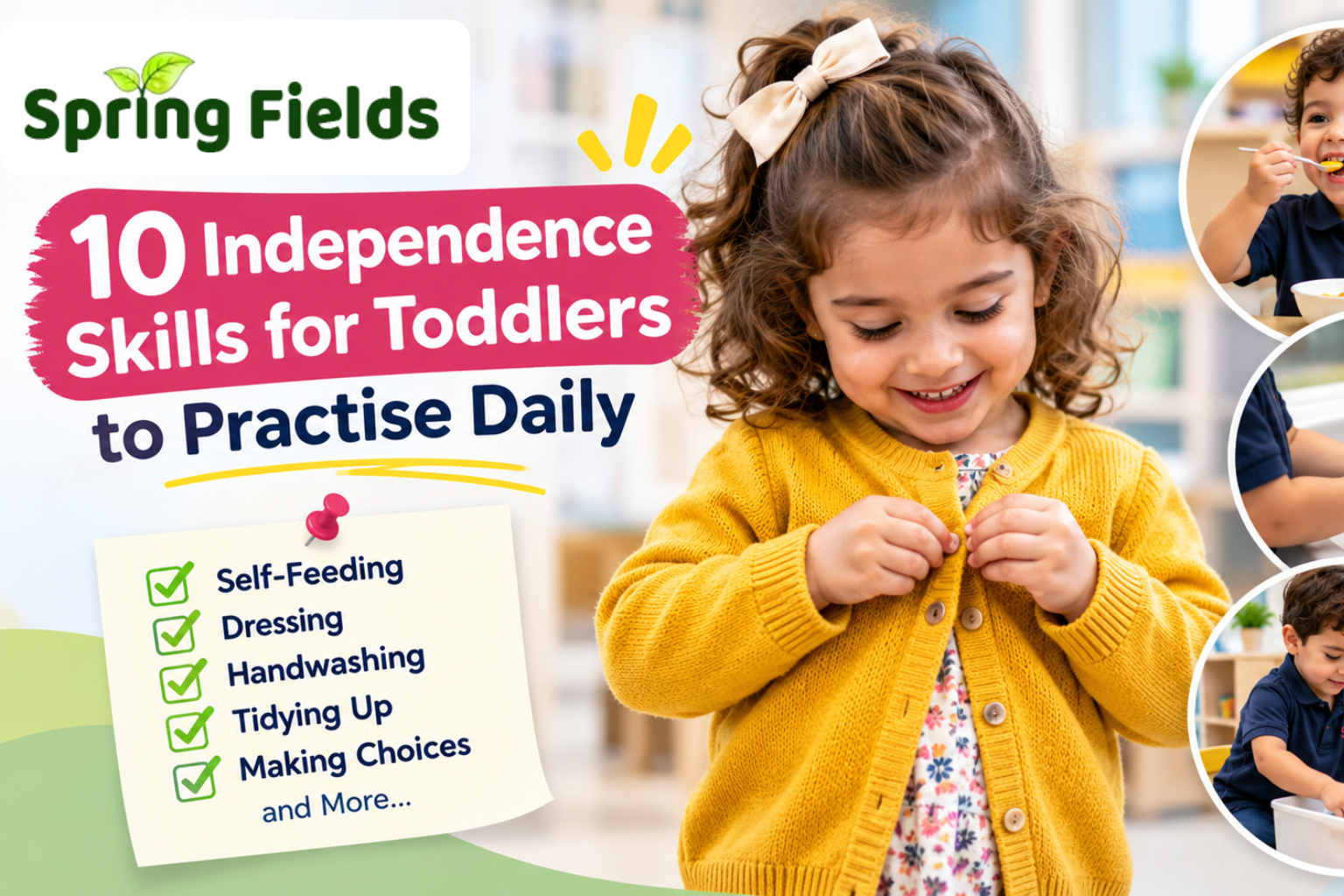
Here are ten everyday skills that parents can encourage without rushing children or expecting perfection.
Why Is Independence Important in Early Childhood?
Independence is an important part of children’s personal, social and emotional development. It helps them become more confident in exploring their surroundings, making simple choices and participating in everyday routines.
The UK Department for Education’s Development Matters guidance highlights the importance of giving young children opportunities to make decisions, manage personal needs and develop confidence through supported experiences.
Developing independence can help toddlers:
- Build confidence in their abilities.
- Develop problem-solving skills.
- Participate in daily routines.
- Practise communication and decision-making.
- Develop coordination and practical skills.
- Learn patience and persistence.
- Become more comfortable trying unfamiliar activities.
The objective is not to make toddlers do everything without help. It is to give them opportunities to try, learn and gradually take responsibility for small tasks.
10 Everyday Independence Skills Toddlers Can Practise
Children develop at different rates. Some may begin attempting certain tasks earlier than others. Choose activities according to your child’s age, abilities and interests.
1. Learning to Eat Independently
Mealtimes are among the first opportunities for toddlers to practise independence.
Encourage your child to:
- Hold an age-appropriate spoon.
- Pick up suitable finger foods.
- Drink from an appropriate cup with supervision.
- Try feeding themselves.
- Help communicate when they are hungry or full.
Expect some mess. Spilling food and dropping a spoon are normal parts of learning.
Offer encouragement instead of taking over immediately. Make sure food is prepared in a safe, age-appropriate way and supervise children throughout meals.
2. Putting Away Toys After Playtime
Tidying up helps toddlers understand that everyday activities have simple beginnings and endings.
Start with a small task. Ask your child to place large toys in a basket or return a few books to a low shelf.
You can make the activity enjoyable by:
- Using labelled storage baskets.
- Showing where each toy belongs.
- Tidying together.
- Giving simple instructions.
- Praising participation.
Avoid expecting a toddler to organise an entire room. A few toys at a time are enough.
3. Choosing Between Two Options
Simple choices allow toddlers to express preferences and participate in decisions.
For example, ask:
- Would you like the blue cup or the green cup?
- Which book should we read?
- Would you like to play with blocks or puzzles?
- Which shirt would you like to wear?
Keep the options limited and appropriate.
This encourages children to communicate what they want while learning that their choices can influence everyday experiences.
4. Practising Simple Dressing Skills
Getting dressed involves several skills, including coordination, movement, sequencing and problem-solving.
Depending on their developmental stage, toddlers can practise:
- Removing socks.
- Pulling off simple clothing.
- Putting their arms through sleeves.
- Choosing between two outfits.
- Pulling up elastic-waist trousers.
- Placing shoes in their designated spot.
Choose comfortable clothing that is easy to manage. Give your child enough time to attempt each step.
The goal is participation, not getting dressed perfectly.
5. Washing Hands With Guidance
Handwashing is an important personal-care routine.
Help your toddler become familiar with the steps:
- Wet their hands.
- Use a suitable amount of soap.
- Rub their hands together.
- Rinse thoroughly.
- Dry their hands.
Use a stable step stool if necessary and supervise closely around sinks and water.
Explain each step in simple language. Repetition helps children become familiar with the routine.
6. Learning to Communicate Their Needs
Independence also involves being able to communicate.
Encourage your child to express basic needs such as:
- Asking for water.
- Requesting help.
- Saying when something hurts.
- Asking to use the toilet.
- Expressing discomfort.
- Saying when they want to stop an activity.
Some toddlers may use words, while others rely on gestures, facial expressions or a combination of communication methods.
Respond patiently and model simple phrases. Avoid pressuring children to speak before they are ready.
7. Selecting a Book or Activity
Allowing toddlers to choose an activity gives them opportunities to practise decision-making.
Offer a small selection of age-appropriate books, puzzles, building blocks or creative materials.
Let your child decide what interests them.
During the activity, encourage exploration rather than directing every action. You can participate, ask questions and provide help when needed.
This approach supports curiosity, concentration and confidence.
8. Carrying and Returning Their Belongings
Toddlers can gradually participate in looking after their own belongings.
Simple activities include:
- Carrying a lightweight nursery bag with supervision.
- Placing shoes in a designated area.
- Returning a water bottle to its usual place.
- Putting a favourite book back on the shelf.
- Finding their own labelled belongings with help.
These tasks introduce responsibility through familiar routines.
Avoid giving young children heavy bags or objects that may create a safety risk.
9. Practising Toilet-Related Routines
Toilet learning is an individual process. Children show readiness at different times, and not every toddler will be ready to begin at the same age.
When appropriate, encourage your child to:
- Recognise and communicate when they need the toilet.
- Become familiar with the bathroom routine.
- Help pull clothing up or down.
- Wash and dry their hands afterwards.
- Ask an adult for assistance.
Maintain a calm and supportive approach. Avoid punishment, embarrassment or comparisons with other children.
Parents should discuss their child’s progress with nursery educators so that home and nursery routines can be consistent.
10. Helping With Small Everyday Tasks
Toddlers enjoy feeling involved in family activities.
Give them simple, supervised responsibilities such as:
- Placing large, safe objects in a basket.
- Helping arrange books.
- Putting napkins on a table.
- Watering a plant with a small container.
- Passing a safe item to an adult.
- Helping organise their play area.
These activities help children understand that they can contribute to everyday routines.
Choose tasks that are suitable for their abilities. Keep small objects, sharp items, hot surfaces and cleaning products out of reach.
How Can Parents Encourage Independence Without Creating Pressure?
One of the biggest challenges for parents is finding the balance between helping a toddler and allowing them to try independently.
It can be quicker to feed a child, put on their shoes or tidy their toys yourself. However, always taking over means fewer opportunities for children to practise.
Try these five approaches.
Give Them Enough Time
Toddlers often need longer to complete simple tasks. Avoid rushing them whenever possible.
Demonstrate Before Helping
Show your child how to complete a task. Then allow them to try.
Break Tasks Into Smaller Steps
Instead of asking your toddler to get completely dressed, start with one manageable action, such as putting an arm through a sleeve.
Encourage Effort
Recognise attempts rather than focusing only on the result. A child who tries to put on a shoe independently is making progress, even if the shoe is on the wrong foot.
Offer Help When Needed
Independence does not mean leaving children to struggle. Provide guidance when a task becomes frustrating, unsafe or beyond their current abilities.
The Department for Education’s early-years guidance also recommends giving children enough time to explore, make choices and practise skills while adults provide appropriate support.
Read the official Development Matters early-years guidance for further information.
How Can a Nursery Support Independence in Toddlers?
A nursery provides opportunities for children to practise everyday skills in a shared learning environment.
Through age-appropriate routines, play and interaction, educators can encourage children to participate in activities rather than simply completing every task for them.
Examples include:
During arrival: Children can gradually become familiar with where their belongings are kept and how the morning routine works.
During playtime: Children can choose suitable activities, explore resources and return toys with guidance.
During meals: Educators can encourage age-appropriate self-feeding and participation in mealtime routines.
During personal care: Children can become familiar with handwashing and other hygiene routines with adult support.
During group activities: Children can practise taking turns, making choices, listening and communicating their needs.
The important factor is providing support according to each child’s developmental stage.
At Spring Fields Preschools in Abu Dhabi, the British EYFS-aligned, play-based learning approach encourages exploration, communication, creativity and independent thinking.
Parents can explore the Spring Fields classes and age groups to understand the different stages of its early-years programmes.
Independence and the Early Years Foundation Stage (EYFS)
The Early Years Foundation Stage places importance on children’s personal, social and emotional development.
This includes developing confidence, understanding feelings, building relationships and gradually learning to manage personal needs.
The Department for Education’s guidance highlights several everyday examples of growing independence, including:
- Feeding themselves.
- Dressing and undressing.
- Managing simple personal-care routines.
- Making choices.
- Developing confidence in their abilities.
- Participating in activities with other children.
These skills are not separate from learning. They are part of the wider development that helps children participate more confidently in their environment.
Parents can learn more about the EYFS approach in Abu Dhabi and how play-based early learning supports different areas of development.
When Should Parents Expect Toddlers to Become Independent?
There is no single age at which every child becomes independent.
A younger toddler may begin feeding themselves or choosing between two toys, while an older toddler may start participating in dressing, tidying and simple personal-care routines.
Progress depends on several factors, including:
- Age and developmental stage.
- Previous opportunities to practise.
- Physical coordination.
- Communication skills.
- Confidence in unfamiliar environments.
- Individual interests and abilities.
Some children may need more time or support with particular tasks.
If you have concerns about your child’s development or loss of previously acquired abilities, speak with your paediatrician or an appropriate child-development professional.
Avoid comparing your child with siblings, classmates or children of the same age. Development should be understood in the context of the individual child.
Give Your Toddler Opportunities to Try
Building independence in toddlers is not about making children grow up faster. It is about helping them develop confidence through small, meaningful experiences.
A child who attempts to hold a spoon, chooses a book, puts away a toy or communicates a need is gradually learning to participate in everyday life.
Parents and educators can support this progress by offering encouragement, maintaining predictable routines and allowing children enough time to practise.
At Spring Fields Preschools, early learning experiences are designed around exploration, purposeful play and children’s overall development.
To learn more about the nursery’s programmes and learning environment, explore Spring Fields Preschools or contact the team.
Frequently Asked Questions
1. How can I teach my toddler to be independent?
Start with simple daily activities such as self-feeding, choosing between two options, putting away toys and helping with dressing. Demonstrate each task, provide guidance and allow your child time to practise.
2. At what age do toddlers start becoming independent?
Independence develops gradually from infancy through the toddler and preschool years. Children begin showing preferences and attempting simple tasks at different ages. Progress depends on individual development and opportunities to practise.
3. What are examples of independence skills in toddlers?
Common examples include feeding themselves, drinking from a cup, choosing activities, helping with dressing, washing hands with assistance, communicating needs and putting away toys.
4. How does nursery help toddlers develop independence?
Nurseries can encourage independence through daily routines, supervised play, age-appropriate responsibilities, group activities and opportunities for children to make simple choices.
5. Should parents help toddlers with everyday tasks?
Yes. Children still need adult guidance and supervision. Parents should demonstrate tasks, provide assistance when necessary and gradually allow children to complete suitable steps independently.
6. Why is independence important before preschool?
Independence helps children participate in daily routines, communicate their needs, make simple decisions and develop confidence in unfamiliar environments. These abilities can support their transition into a group learning setting.
7. Does the EYFS curriculum support independence?
Yes. Personal, social and emotional development is an important part of the EYFS framework. It includes supporting children’s confidence, relationships, emotional development and ability to manage personal needs.