

Fine Motor Skills in Toddlers: 8 Easy Play Ideas
Fine motor skills in toddlers help children use their hands and fingers to explore, play and become more independent. From picking up small toys to turning book pages, holding a spoon and making marks with crayons, these everyday movements are important building blocks of early childhood development.
For parents in Abu Dhabi, supporting these skills does not require expensive toys or complicated activities. Simple experiences at home and nursery can help toddlers practise hand control, hand-eye coordination and the small movements they gradually need for everyday tasks.
At Spring Fields Preschools, children can develop these abilities through age-appropriate play, exploration and daily routines that encourage confidence and independence.
What Are Fine Motor Skills in Toddlers?
Fine motor skills involve using the small muscles of the hands and fingers, together with visual coordination, to perform controlled movements.
Toddlers use these skills when they:
- Pick up toys and move objects between containers.
- Hold a spoon or try to feed themselves.
- Turn the pages of a board book.
- Stack blocks and fit shapes into matching holes.
- Squeeze, roll and mould playdough.
- Hold crayons and make marks on paper.
- Practise simple dressing tasks, such as pulling off socks.
These abilities develop gradually. Children need repeated opportunities to explore different objects, materials and movements at their own pace.
Fine motor development is also connected to broader physical development. Posture, balance, shoulder stability and coordination can support the control children develop in their hands and fingers.
Why Are Fine Motor Skills Important in Early Childhood?
Fine motor skills support much more than drawing or writing. They help children participate in everyday activities and become more confident in what they can do independently.
1. They encourage independence
Picking up food, holding a cup, turning pages and helping with simple dressing tasks allow toddlers to take a more active role in their daily routines.
2. They support hand-eye coordination
Children gradually learn to coordinate what they see with how they move their hands. This helps them stack blocks, place shapes, fit puzzle pieces and handle objects with greater control.
3. They prepare children for early mark-making
Before children are ready for formal writing, they benefit from exploring crayons, paint, sand and other materials. These experiences let them experiment with making lines, shapes and patterns without the pressure of producing neat letters.
4. They build confidence through practice
Completing a small task, such as placing a block on a tower or opening a suitable container, can encourage children to try again and explore new challenges.
The aim is not to make toddlers master every task early. It is to provide enjoyable opportunities for practice and celebrate their individual progress.
8 Fine Motor Activities for Toddlers to Try at Home and Nursery
You can support fine motor development through simple activities using everyday materials. Choose tasks suited to your child’s age, abilities and interests, and supervise play throughout.
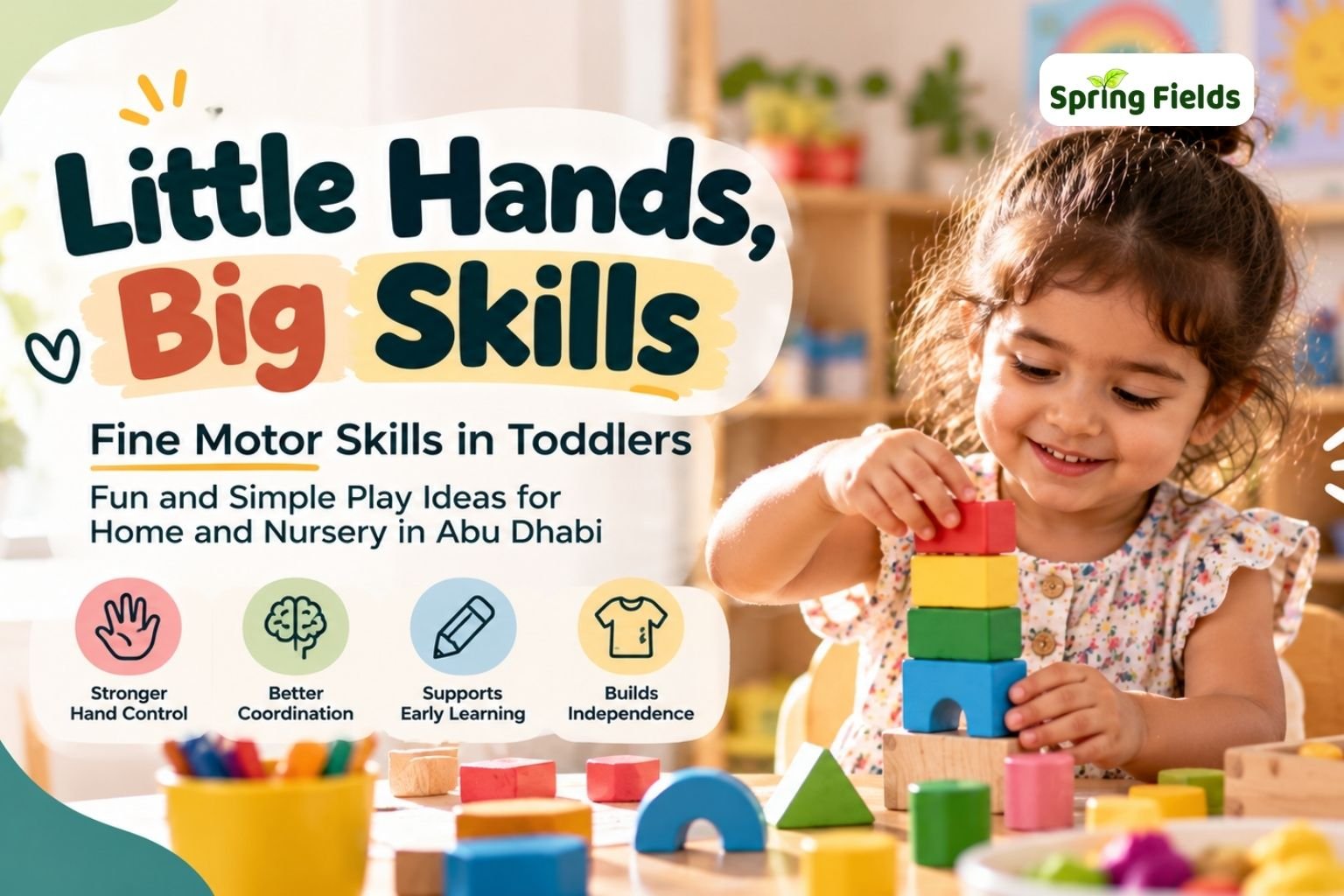
1. Build Towers With Blocks
What you need: Large, age-appropriate building blocks.
Invite your toddler to stack blocks, knock them down and build again. Start with a few blocks and let your child experiment with different arrangements.
This activity encourages children to grasp, release and position objects while coordinating their hands and eyes. It also introduces early ideas about balance, size and space.
Try this: Build a short tower together, then let your child add the next block.
2. Explore Playdough
What you need: Non-toxic, age-appropriate playdough.
Rolling, flattening, pressing and squeezing playdough encourage children to use their hands and fingers in different ways.
You can make simple shapes together or let your toddler explore freely. Describe the movements as you play: “Let’s roll it” or “Can you press it flat?”
Choose materials appropriate for your child’s age and supervise closely. Do not use small accessories with children who may put objects in their mouths.
3. Make Marks With Chunky Crayons
What you need: Large, washable, age-appropriate crayons and paper.
Offer your toddler a few crayons and let them make lines, dots, circles and scribbles. At this stage, the goal is exploration rather than drawing recognisable pictures.
Mark-making helps children practise holding and moving a tool while developing control over their hand movements.
Try this: Draw a large circle and invite your child to add marks around it. Avoid insisting that they copy your drawing exactly.
4. Turn the Pages of a Board Book
What you need: A sturdy board book with colourful pictures.
Encourage your toddler to turn pages, point to pictures and find familiar objects. Thicker pages can be easier for little hands to grasp.
This simple activity supports finger control and hand-eye coordination while also encouraging language development and shared reading.
Try this: Ask your child to find a familiar animal or object on each page and let them turn the page when they are ready.
5. Play With Shape Sorters
What you need: A sturdy shape sorter with large pieces suitable for your child’s age.
Show your toddler how to fit a shape into the matching opening. Allow them to turn the piece, try different positions and work out where it belongs.
This activity encourages grasping, rotating and positioning objects. It also introduces problem-solving and shape recognition.
Start with a small number of shapes if your child finds the activity challenging. The process of trying is more important than completing the sorter quickly.
6. Practise Scooping and Pouring
What you need: A small, stable container, a child-sized spoon and a little water or another suitable material.
During supervised play, let your toddler scoop and transfer water between containers. You can also practise moving large objects with a spoon.
Scooping and pouring help children coordinate their hands and eyes while adjusting the direction and amount of movement.
Keep the activity simple and prepare for spills. Never leave a young child unattended near water, even in a shallow container.
7. Try Simple Posting Games
What you need: A posting box or a suitable container with large openings and age-appropriate objects.
Invite your toddler to place an object into the container and take it out again. Repeat the activity as often as they enjoy.
Posting games encourage children to aim, release and position objects with increasing control. They can also introduce simple concepts such as in, out, full and empty.
Use only objects that are too large to be swallowed or inhaled, and supervise closely to reduce choking risks.
8. Include Children in Everyday Routines
What you need: Everyday household items that are safe and suitable for your child’s age.
Fine motor practice does not need to happen only during playtime. Give your toddler opportunities to participate in simple daily tasks, such as:
- Picking up large toys and placing them in a basket.
- Turning the pages of a book while you read.
- Holding a spoon during mealtimes.
- Pulling off socks or helping with easy clothing tasks.
- Placing suitable items on a low, stable surface.
These everyday experiences connect hand skills with real-life independence.
Offer help when needed, but give your child time to attempt the task. A little extra time and encouragement can make everyday routines valuable learning opportunities.
How Can Parents Support Fine Motor Development Without Pressure?
Children develop at different rates, so it is important to focus on opportunities to practise rather than comparing one child with another.
Here are five practical ways to support progress.
Keep activities short and enjoyable. Toddlers have varying attention spans. Stop or change activities when your child loses interest.
Offer different materials. Blocks, crayons, playdough, books and suitable household objects provide varied opportunities to practise hand movements.
Demonstrate, then allow exploration. Show your child how an activity works, then give them time to try it independently.
Make small adjustments. If a task is difficult, use larger objects, simpler steps or easier-to-hold tools.
Praise effort rather than perfection. Comments such as “You kept trying” or “You placed the block carefully” acknowledge the child’s effort without creating pressure to perform.
The UK Department for Education’s early-years guidance also highlights the value of repeated, varied opportunities to explore materials, puzzles, arts and crafts, and small tools, with appropriate adult feedback and support.
You can read more in the official Fine Motor Skills guidance for early-years providers.
Fine Motor Skills and Nursery Learning in Abu Dhabi
A supportive nursery environment can give children regular opportunities to develop hand control through play and everyday experiences.
Activities such as building, painting, puzzles, sensory exploration and age-appropriate practical tasks can be incorporated into a broader early learning experience.
At Spring Fields Preschools in Abu Dhabi, families can explore the nursery’s classes to learn about its early learning environment and the experiences available to young children.
When considering a nursery, parents can ask how educators adapt activities to different developmental stages, encourage independence and support children who need additional time or help.
The goal is to give each child opportunities to participate, practise and build confidence rather than expecting every child to complete the same task in the same way.
When Should Parents Seek Advice About Fine Motor Development?
Differences in development are common. Some toddlers enjoy drawing and building, while others prefer movement, pretend play or exploring objects in different ways.
However, if you are concerned about your child’s hand use or coordination, discuss your observations with your paediatrician.
Consider seeking advice if your child consistently struggles with everyday tasks that seem appropriate for their developmental stage, rarely uses their hands to explore objects, has difficulty coordinating both hands or loses skills they previously had.
A healthcare professional can consider your child’s overall development and advise whether further assessment or support is appropriate.
This article provides general educational information and is not a substitute for individual developmental or medical advice.
Small Activities Can Build Important Skills
Fine motor development happens through many small experiences: turning a page, stacking a block, holding a spoon or making a mark on paper.
Parents do not need to turn every moment into a structured lesson. Providing safe materials, allowing time for exploration and offering gentle encouragement can help toddlers practise these skills as part of everyday life.
At Spring Fields Preschools, children have opportunities to learn through play and participate in experiences that support their growing independence.
Want to learn more about early learning at Spring Fields Preschools? Explore our classes or contact our team to discuss your child’s early learning needs.
Frequently Asked Questions
1. What are fine motor skills in toddlers?
Fine motor skills are the controlled movements children make using their hands and fingers, supported by coordination with their eyes. Examples include picking up toys, turning book pages, holding a spoon, stacking blocks and making marks with crayons.
2. At what age do toddlers develop fine motor skills?
Fine motor skills begin developing in infancy and continue to improve throughout toddlerhood and the preschool years. Children progress at different rates, and their abilities depend on their experiences, development and opportunities to practise.
3. What are the best fine motor activities for toddlers?
Useful activities include stacking large blocks, exploring playdough, making marks with chunky crayons, turning board-book pages, using shape sorters and practising supervised scooping or pouring. Choose activities that are safe and appropriate for your child’s age.
4. How do fine motor skills help children prepare for school?
Fine motor skills help children handle tools, coordinate their hands and eyes, explore mark-making and participate in everyday routines. These experiences can support later activities such as drawing, using classroom materials and early writing.
5. Can fine motor skills be developed through everyday play?
Yes. Everyday activities such as self-feeding, turning pages, putting away toys and helping with simple dressing tasks offer opportunities to practise hand control. Children benefit from repeated experiences without pressure to complete tasks perfectly.
6. Should I be concerned if my toddler struggles with fine motor activities?
Not necessarily, because children develop at different rates. If your child consistently struggles with everyday hand movements, has difficulty using objects or loses previously acquired skills, discuss your concerns with a paediatrician.
7. How can a nursery support fine motor development?
A nursery can provide age-appropriate activities such as puzzles, block play, art, sensory exploration and practical tasks. Educators can adapt materials and offer support according to each child’s developmental stage and needs.